


Garbage collection trucks are essential municipal and environmental utility vehicles engineered to keep modern cities hygienic, reduce waste volume, and optimize logistics costs. Equipped with heavy-duty hydraulic compaction mechanisms, today’s garbage collection trucks compress solid waste up to a 1:6 ratio, maximizing payload efficiency on every route.
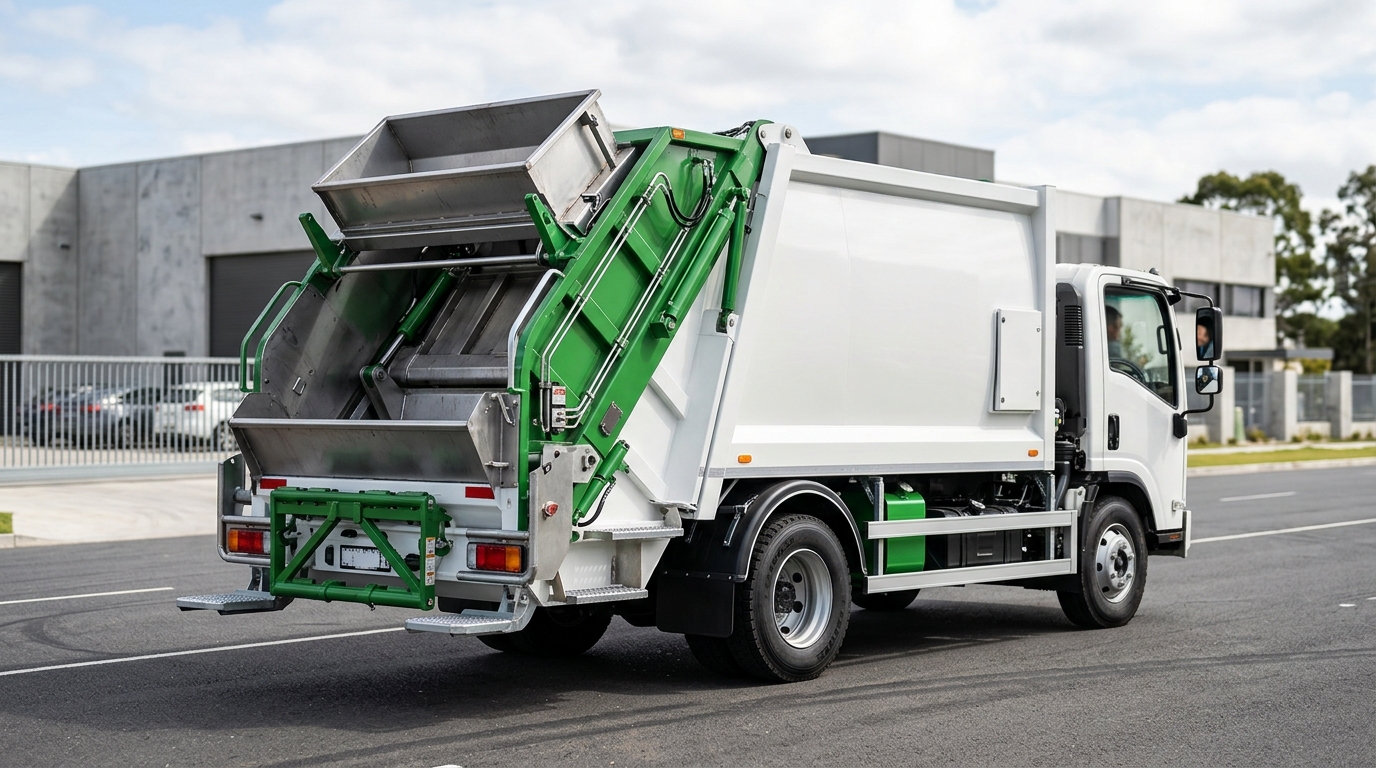
Table of Contents
How Modern Garbage Collection Trucks Work
Garbage collection trucks load domestic and commercial solid waste from standardized bins into a rear loading hopper, compact the waste forward against a hydraulic ejection blade, and discharge it cleanly at landfill or transfer stations. Driven via the truck’s Power Take-Off (PTO), high-pressure hydraulic cylinders automate each sweep and pack cycle in just 18 to 24 seconds.
Hydraulic Compaction Mechanism & Leachate Control
- High Compaction Ratio (Up to 1:6): Reduces loose waste volume drastically, cutting fuel burn and landfill round-trips.
- EN 840 Universal Bin Lifters: Compatible with 120L, 240L, 770L, and 1,100L plastic or galvanized containers.
- 100% Sealed Leachate Tanks: Rear EPDM rubber gaskets and dedicated stainless steel dirty-water sumps prevent odor and liquid leakage onto urban streets.
- Wear-Resistant Steel Hopper: Hopper floors and compaction blades constructed from Hardox 450 abrasion-resistant steel.
Garbage Collection Trucks by Body Capacity
Mini Compactors (4 – 8 m³)
Built on 3.5 to 7.5-ton narrow chassis for historic districts, resorts, and tight alleyways, often featuring satellite transfer tipping into mother trucks.
Standard Municipal Compactors (10 – 16 m³)
Mounted on 15 to 18-ton two-axle trucks, delivering optimal daily collection capacity of 600+ bins per shift.
Heavy-Duty Rear Loaders (18 – 24 m³)
Installed on 6×2, 6×4, and 8×4 heavy chassis for metropolitan districts and long-haul transfer routes.
2026 EN 1501 Safety & Structural Standards
Every unit complies with European EN 1501-1 refuse collection vehicle standards: two-hand safety controls, rear footstep weight sensors, speed limiters when personnel occupy rear steps, night-vision rear cameras, and emergency stop buttons on both sides of the tailgate. Check TSE Standards for local regulatory certification.
Technical Specifications Table
| Body Volume | Hopper Volume | Compaction Ratio | Chassis GVW | Compatible Bins |
|---|---|---|---|---|
| 6 + 1 m³ | 1.0 m³ | 1:4 | 7.5 – 10 Ton | 120 / 240 / 770 L |
| 13 + 1.5 m³ | 1.5 m³ | 1:5 | 15 – 18 Ton | All EN 840 Bins |
| 18 + 2 m³ | 2.0 m³ | 1:6 | 26 Ton | EN 840 + Crane Skip |
For tailored municipal fleet specifications, visit our Contact Page or explore our Vacuum Tanker Trucks Guide.
Frequently Asked Questions: Garbage Collection Trucks
What steel is used in garbage collection trucks bodies?
High-wear areas like the hopper floor and packer blade are fabricated from Hardox 450 abrasion-resistant steel, while side panels use high-tensile ST-52 structural steel.
How fast is one compaction cycle?
A complete sweep-and-pack hydraulic cycle takes between 18 and 25 seconds depending on chassis engine RPM.