


Fire fighting vehicles form the backbone of emergency response, municipal fire suppression, and industrial safety operations worldwide. Engineered to safeguard lives and critical infrastructure, modern fire fighting vehicles combine high-capacity water and foam storage, high-pressure centrifugal pumps, and rapid rescue equipment on heavy-duty commercial chassis.
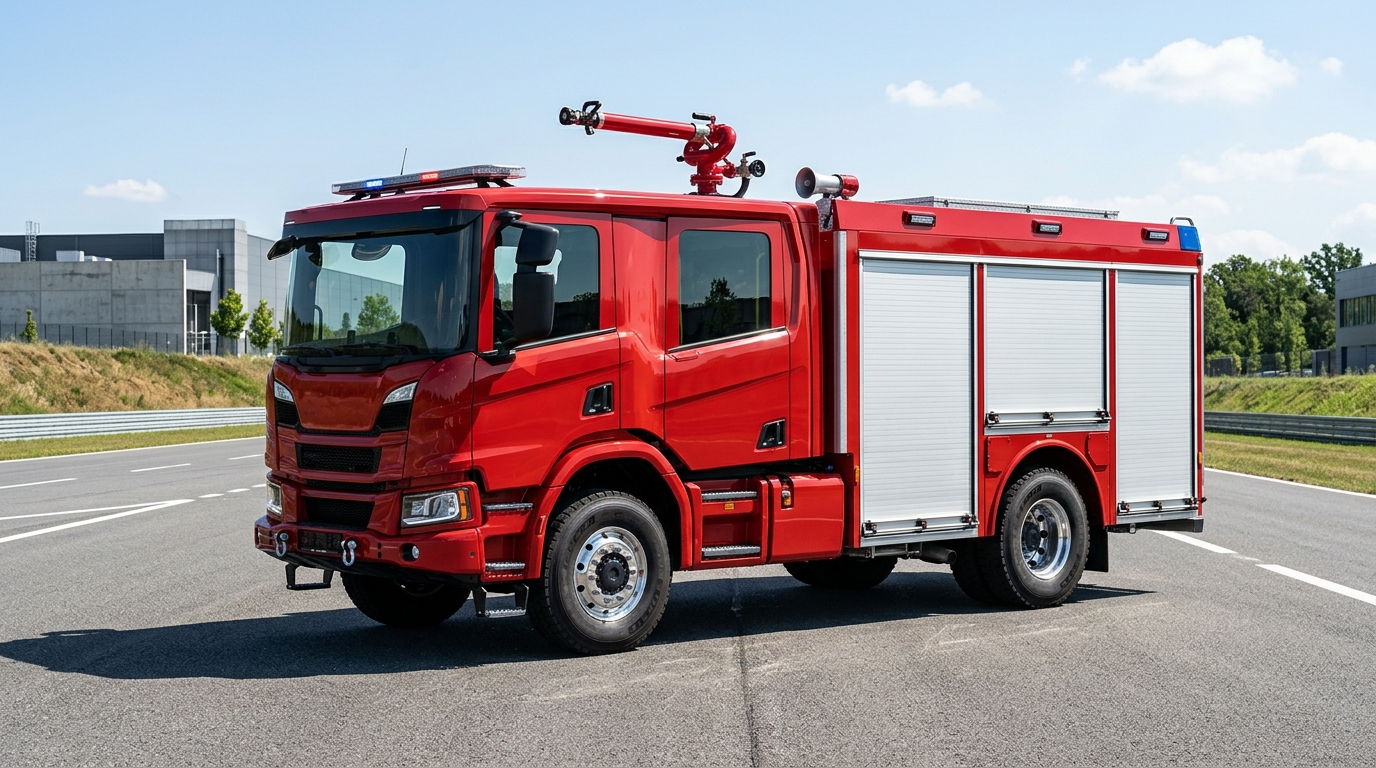
Table of Contents
- What Are Fire Fighting Vehicles and Their Core Functions?
- Main Categories of Modern Fire Fighting Vehicles
- Essential Superstructure Equipment & Pump Systems
- 2026 EN 1846 International Safety Standards
- Fire Fighting Vehicles Technical Comparison Table
- Preventive Maintenance & Readiness Protocols
- Frequently Asked Questions: Fire Fighting Vehicles
What Are Fire Fighting Vehicles and Their Core Functions?
Fire fighting vehicles are custom-engineered emergency superstructures built onto reinforced truck chassis to transport extinguishing agents—water, Class A/B foam concentrates, and dry chemical powder—directly to hazard zones. Beyond water discharge, contemporary fire fighting vehicles operate as mobile command stations equipped with pneumatic telescopic lighting masts, hydraulic extrication tools, thermal imaging integration, and self-protection nozzles.
Main Categories of Modern Fire Fighting Vehicles
Different emergency environments demand tailored vehicle architectures:
1. Rapid Intervention Fire Fighting Vehicles
Designed for dense urban centers and narrow historical streets on 3.5 to 10-ton chassis. Equipped with Ultra High Pressure (UHP) hose reels, these agile units suppress incipient fires within the critical first five minutes of arrival.
2. Municipal Multi-Purpose Fire Tenders
The primary fleet workhorse for city fire departments. Carrying 4,000 to 8,000 liters of stainless steel or GRP composite water tanks alongside 500+ liters of foam concentrate, these fire fighting vehicles handle structural fires, vehicle collisions, and urban rescue missions.
3. Industrial & Petrochemical Foam Tenders
Heavy-duty 6×4 and 8×4 platforms built for refineries, chemical parks, and airports. Featuring high-flow roof monitors capable of 6,000 L/min output, electronic foam proportioners, and dry chemical powder (DCP) units.
4. Aerial Ladder & Hydraulic Platform Fire Units
Integrating articulated or telescopic hydraulic booms reaching 18 to 54 meters for high-rise evacuations and elevated fire suppression.
Essential Superstructure Equipment & Pump Systems
- Corrosion-Free Tanks: Manufactured from AISI 304 / AISI 316L stainless steel or lightweight GRP fiberglass with internal anti-slosh baffles for cornering stability.
- Two-Stage Centrifugal Pumps: Bronze or anodized aluminum fire pumps providing both normal pressure (10 bar) and high pressure (40 bar) simultaneously.
- Electronic Foam Proportioning: Automatic around-the-pump or CAFS (Compressed Air Foam System) dosing between 0.1% and 6%.
- Anodized Aluminum Roll-Up Shutters: Dust- and water-tight side lockers with sliding and tiltable equipment trays for ergonomic access.
2026 EN 1846 International Safety Standards
All European and international compliant fire fighting vehicles must adhere strictly to TSE and EN 1846 (Firefighting and Rescue Service Vehicles) regulations. These directives certify static tilt-table stability angles, braking efficiency under full liquid payload, pump endurance tests, and electrical thermal insulation.
Fire Fighting Vehicles Technical Comparison Table
| Vehicle Class | Water Tank | Foam Tank | Pump Output | Chassis |
|---|---|---|---|---|
| Rapid Intervention | 500 – 1,500 L | 50 – 150 L | 1,500 L/min @ 10 bar | 4×2 / 4×4 (3.5 – 7.5t) |
| Municipal Fire Truck | 4,000 – 8,000 L | 400 – 800 L | 3,000 L/min @ 10 bar | 4×2 / 6×2 (15 – 26t) |
| Industrial Heavy Tender | 8,000 – 14,000 L | 1,000 – 3,000 L | 6,000 L/min @ 10 bar | 6×4 / 8×4 (26 – 41t) |
Preventive Maintenance & Readiness Protocols
Monthly vacuum suction tests, immediate freshwater flushing of foam manifolds after deployment, regular lubrication of butterfly valves, and sub-frame mount inspections keep fire fighting vehicles mission-ready 24/7. Contact our engineering division via the Ogemsan Contact Page or explore our Water Tanker Trucks Guide.
Frequently Asked Questions: Fire Fighting Vehicles
What tank material is best for fire fighting vehicles?
AISI 304/316L stainless steel and GRP composite tanks are preferred because they resist chemical corrosion from foam concentrates and guarantee decades of leak-free service.
What is CAFS in modern fire fighting vehicles?
Compressed Air Foam System (CAFS) injects compressed air into water-foam solutions, multiplying extinguishing efficiency up to five times while drastically reducing water consumption.